



Commercial Roofing Contractors Houston
How to Choose a Contractor for Commercial Roof Repair Replacement and Maintenance

Choosing among commercial roofing contractors in Houston is a business decision with consequences for the building, operations, insurance conversations, capital planning, and long-term ownership cost. The right contractor should do more than name a product and submit a price. A credible roofing partner studies the existing assembly, documents physical conditions, explains the proposed method, identifies exclusions, plans safety and access, and connects the scope to the owner's actual priorities.
Houston roofs face high heat, ultraviolet exposure, humidity, heavy rain, hail, straight-line wind, tropical weather, rooftop equipment traffic, and rapid weather changes. Those conditions do not make every roof failure identical. A leak may originate at a seam, curb, wall, drain, fastener, edge, penetration, or damaged roof field, then travel before appearing indoors. Contractor selection should therefore begin with diagnosis rather than a predetermined repair or replacement pitch.
Showtime Exteriors provides commercial roof inspection, repair, maintenance, restoration, recover, retrofit, and replacement services in Houston and throughout Texas. The company evaluates TPO, PVC, EPDM, metal, modified bitumen, coatings, asphaltic systems, and aging gravel-surfaced built-up roofing. Gravel BUR requires particular caution because aggregate can conceal moisture, cracks, blisters, deteriorated felts, old patches, and drainage defects. When deterioration is widespread, another patch should not be promoted as a dependable long-term answer.
Call Showtime Exteriors at 817-400-ROOF (7663) to schedule a Houston commercial roof assessment.
What a Houston Commercial Roofing Contractor Should Provide
A commercial roofing contractor should provide a defensible process from investigation through closeout. That includes roof-system identification, mapped observations, photographs, moisture evaluation when appropriate, a written scope, compatible materials, safety planning, operational coordination, quality control, cleanup, and final documentation. The contractor should distinguish confirmed conditions from assumptions and explain which findings materially affect the recommendation.
A strong proposal should state what is included, what is excluded, how quantities were determined, and what evidence would trigger a change. Clear boundaries protect both owner and contractor while making competing bids easier to compare.
Start With the Building Owner's Objectives
A warehouse owner seeking ten more years of service may need a different plan from an investor preparing a sale, a retailer protecting daily customer access, or a facility manager responding to active leaks. Discuss holding period, budget cycle, tenant requirements, sensitive operations, energy goals, warranty expectations, insurer questions, and scheduled equipment work before comparing systems or prices.
Owners should separate observed facts, reported history, test results, and professional judgment. That discipline reduces confusion during budgeting, insurer discussions, ownership transitions, and later maintenance.
Why Commercial Experience Matters
Commercial roofs involve large areas, low slopes, internal drainage, rooftop mechanical systems, complex transitions, occupied operations, material staging, wind design, and specialized installation procedures. Residential roofing success does not automatically establish expertise with single-ply membranes, structural metal, modified bitumen, coatings, recover assemblies, or industrial details. Ask for relevant project experience, not merely total years in business.
The contractor should also explain how the detail will be inspected after completion and when it should be reviewed again. A defined follow-up date turns a one-time project into a manageable roof history.
Verify Insurance Licensing and Business Identity
Property owners should verify the contractor's current legal business identity, contact information, insurance documentation, and any licensing or registration applicable to the project location and scope. Certificates should be reviewed rather than assumed. Contracting parties, invoices, warranty documents, permits, and insurance records should use consistent names so responsibility remains clear after the work is completed.
Site conditions can affect the final method. Heat, humidity, wind, wet surfaces, lightning, restricted access, occupied areas, and material cure limits may require sequencing changes without lowering the quality standard.
Evaluate Safety Before Work Begins
Safety is part of project competence. Ask how the contractor will manage access, fall protection, warning lines, roof openings, fragile skylights, electrical hazards, material handling, weather, heat exposure, ground-level exclusion zones, and emergency response. A vague promise to be careful is not a site-specific plan, particularly on an occupied commercial building with employees, customers, vendors, and delivery traffic.
Documentation matters because the next facility manager or contractor may not know what was changed. Labeled photographs, dates, materials, locations, and responsible parties make future decisions faster and more defensible.
Demand a Roof Specific Inspection
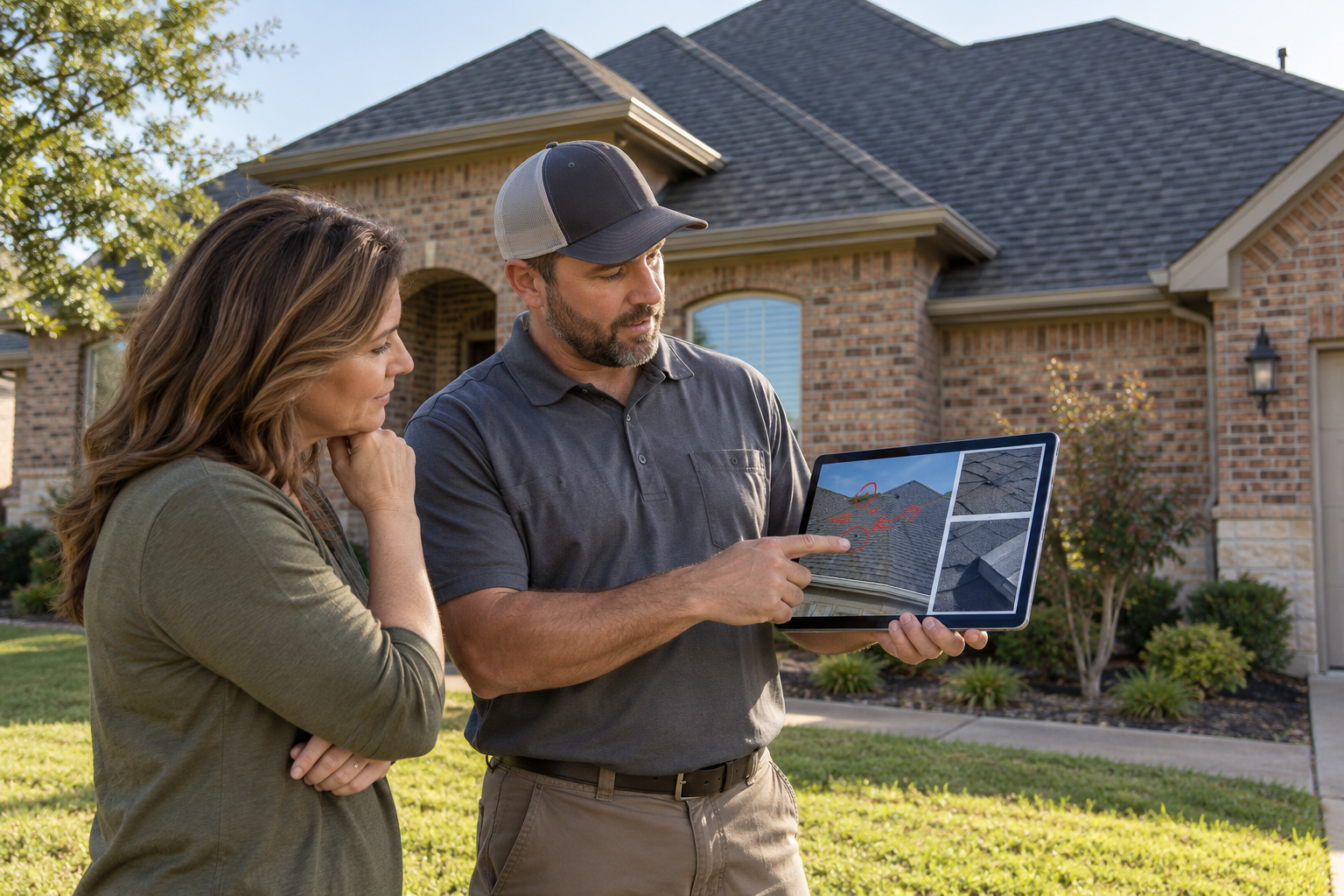
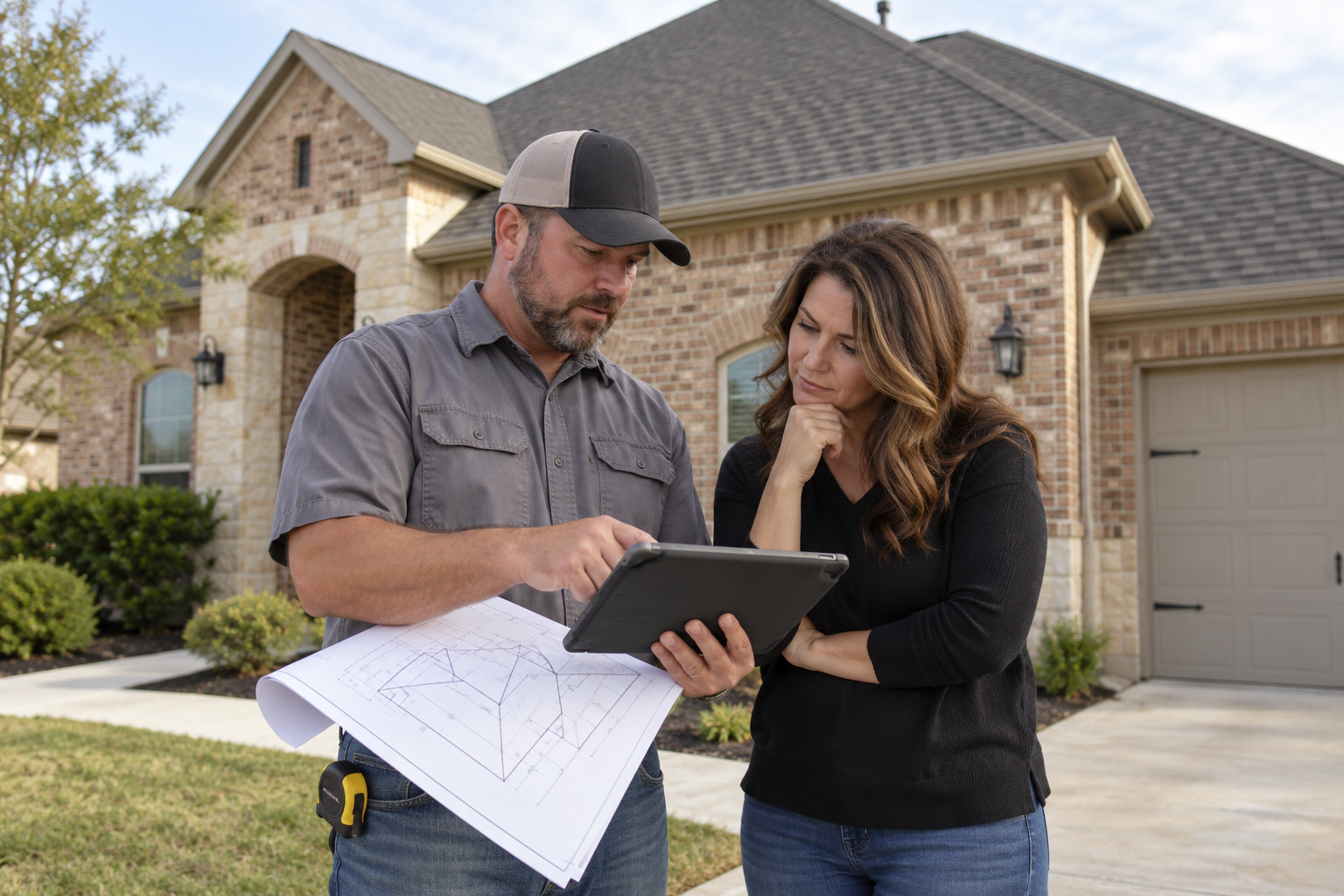
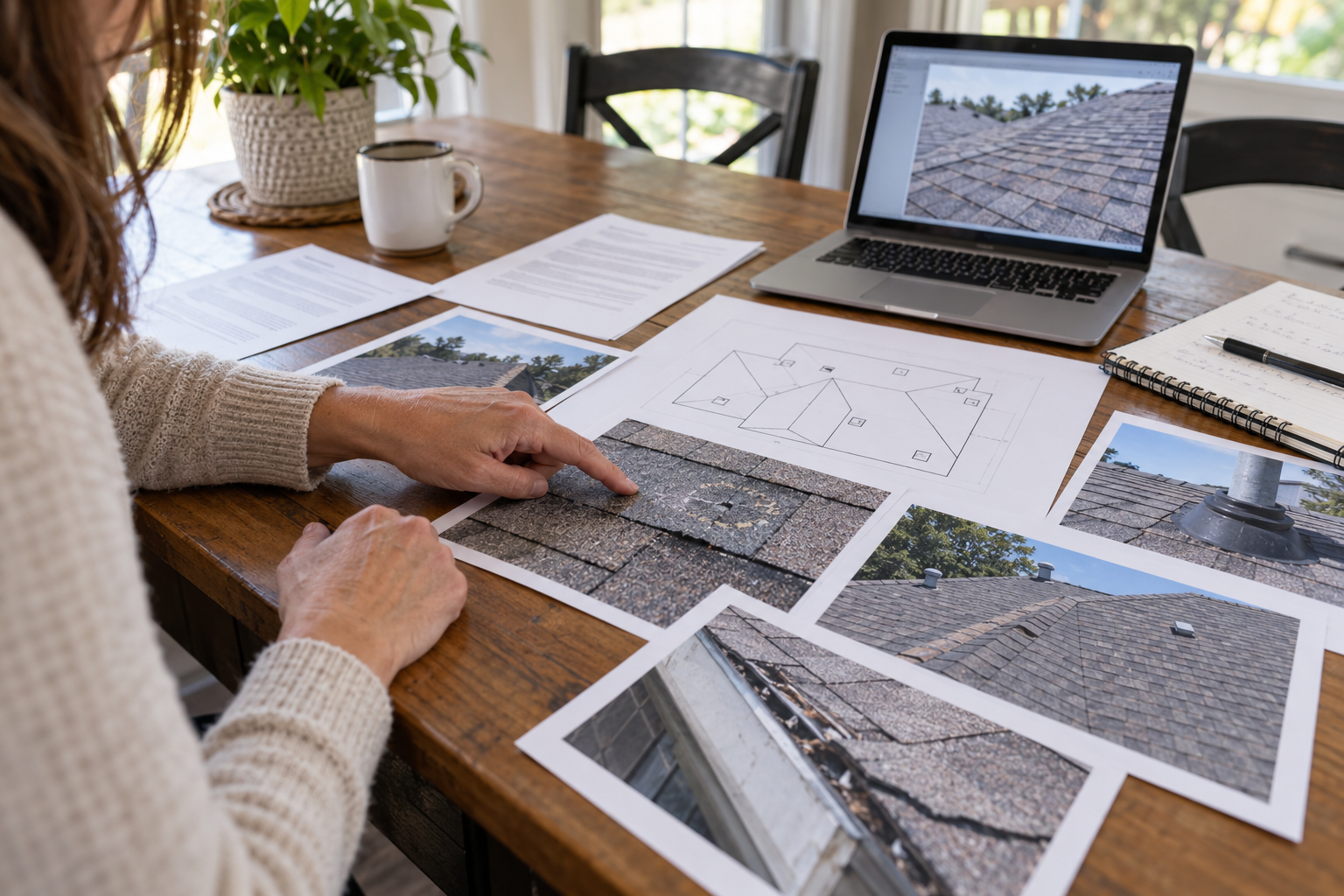
A useful inspection identifies the roof type, approximate age, assembly, attachment, visible defects, drainage, penetrations, edges, walls, rooftop equipment, prior repairs, and interior evidence. It should not treat the entire roof as one uniform surface. Roof plans and labeled photographs help owners understand where conditions exist, how quantities were developed, and why a proposed action is appropriate.
A strong proposal should state what is included, what is excluded, how quantities were determined, and what evidence would trigger a change. Clear boundaries protect both owner and contractor while making competing bids easier to compare.
Understand the Difference Between Observation and Diagnosis
A ceiling stain confirms that water was present, but it does not prove the roof entry point, date, or cause. Water may travel along deck flutes, insulation, framing, conduits, curbs, or walls. Contractors should explain the likely failure pathway, evidence supporting it, remaining uncertainty, and any testing needed before promising that a particular repair will solve the problem.
Owners should separate observed facts, reported history, test results, and professional judgment. That discipline reduces confusion during budgeting, insurer discussions, ownership transitions, and later maintenance.
Ask How Moisture Will Be Evaluated
Moisture can change the feasibility and limits of repair, restoration, recover, or replacement. Visual inspection may be supplemented by infrared scanning, capacitance, nuclear testing, probing, core samples, or test cuts when appropriate. Each method has limitations and may require verification. Ask who interprets the information and how suspected wet areas will affect removal quantities, insulation, deck review, and pricing.
The contractor should also explain how the detail will be inspected after completion and when it should be reviewed again. A defined follow-up date turns a one-time project into a manageable roof history.
Compare Repair Restoration Recover and Replacement
A responsible contractor explains the available pathways rather than forcing every building into one solution. Repair may fit isolated defects on a serviceable assembly. Restoration requires a qualified, compatible, sufficiently dry substrate. Recover requires code, attachment, weight, moisture, drainage, and detail evaluation. Replacement becomes more defensible when deterioration, moisture, attachment failure, or repeated repairs make limited work unreliable.
Site conditions can affect the final method. Heat, humidity, wind, wet surfaces, lightning, restricted access, occupied areas, and material cure limits may require sequencing changes without lowering the quality standard.
Review TPO Contractor Capabilities
TPO work requires correct membrane identification, cleaning, preparation, heat welding, probing, flashing, termination, fastening, and weather control. Ask how crews verify weld quality, handle contaminated or aged membrane, replace wet materials, detail penetrations, and document repairs. A white membrane alone does not identify its chemistry, and generic products should not be applied without compatibility review.
Documentation matters because the next facility manager or contractor may not know what was changed. Labeled photographs, dates, materials, locations, and responsible parties make future decisions faster and more defensible.
Review PVC Contractor Capabilities
PVC systems use heat-welded details but are not interchangeable with TPO. Chemical exposure, grease, plasticizer migration, age, and surface contamination may affect repair preparation. Restaurant, manufacturing, and industrial roofs can require special cleaning and material selection. The proposal should identify the existing membrane and specify compatible components rather than describing every white single-ply roof as the same system.
A strong proposal should state what is included, what is excluded, how quantities were determined, and what evidence would trigger a change. Clear boundaries protect both owner and contractor while making competing bids easier to compare.
Review EPDM Contractor Capabilities
EPDM repair and replacement require knowledge of primers, tapes, adhesives, flashings, terminations, shrinkage, field seams, penetrations, and substrate conditions. Ask how the contractor will prepare aged rubber, correct movement at walls and curbs, address wet insulation, and verify adhesion. Surface treatment will not correct widespread shrinkage, failed attachment, or deteriorated supporting materials.
Owners should separate observed facts, reported history, test results, and professional judgment. That discipline reduces confusion during budgeting, insurer discussions, ownership transitions, and later maintenance.
Review Commercial Metal Roofing Capabilities
Metal roofing evaluation should address panel profile, seams, clips, exposed or concealed fasteners, washers, closures, flashing, corrosion, thermal movement, edges, penetrations, gutters, and substrate. Coating every fastener with sealant is not a complete strategy when holes are elongated, panels are loose, metal is corroded, or movement remains uncontrolled. The scope should correct the actual mechanism.
The contractor should also explain how the detail will be inspected after completion and when it should be reviewed again. A defined follow-up date turns a one-time project into a manageable roof history.
Review Modified Bitumen Capabilities
Modified bitumen work may involve torch-applied, hot-asphalt, cold-adhered, self-adhered, or liquid-applied methods. Project conditions, occupancy, substrate, weather, and fire-safety requirements should shape the selection. Ask how the contractor will address open laps, splits, blisters, exposed reinforcement, transitions, drains, and incompatible previous repairs while protecting building operations.
Site conditions can affect the final method. Heat, humidity, wind, wet surfaces, lightning, restricted access, occupied areas, and material cure limits may require sequencing changes without lowering the quality standard.
Review Roof Coating Qualifications
A coating is a manufactured system, not a bucket of generic liquid. The roof must be evaluated for chemistry, adhesion, moisture, cleanliness, slope, ponding, repairs, reinforcement, coverage rate, thickness, and cure conditions. Ask for the preparation standard, test process, detail treatment, wet-film or dry-film quality control, exclusions, and manufacturer requirements before comparing coating proposals.
Documentation matters because the next facility manager or contractor may not know what was changed. Labeled photographs, dates, materials, locations, and responsible parties make future decisions faster and more defensible.
Why Aging Gravel BUR Demands Greater Scrutiny
Loose aggregate can hide the built-up membrane and make its true condition difficult to evaluate. Beneath the gravel may be deteriorated felts, cracks, blisters, irregular asphalt, trapped moisture, failed patches, and drainage problems. Controlled aggregate removal and verification are often required. A contractor who praises the surface without investigating concealed conditions is not giving the owner a dependable assessment.
A strong proposal should state what is included, what is excluded, how quantities were determined, and what evidence would trigger a change. Clear boundaries protect both owner and contractor while making competing bids easier to compare.
A qualified contractor should investigate concealed deterioration before recommending more work on an aging gravel surfaced BUR roof.
When Gravel BUR Replacement Planning Is Responsible
Replacement or a properly evaluated recover may be more responsible when an aging gravel BUR has recurring leaks, widespread moisture, failing flashings, extensive patching, poor drainage, unstable surfacing, deck concerns, or insurance restrictions. Loose gravel is generally not a dependable coating substrate. Repeated patching can consume operating funds while leaving the underlying uncertainty unresolved.
Owners should separate observed facts, reported history, test results, and professional judgment. That discipline reduces confusion during budgeting, insurer discussions, ownership transitions, and later maintenance.
Ask How Drainage Will Be Addressed
Drains, scuppers, gutters, downspouts, overflows, crickets, sumps, tapered insulation, and structural slope all affect roof performance. Clearing debris is maintenance; correcting chronic ponding may require design or construction changes. Contractors should map persistent water, inspect drainage components, distinguish blockage from slope problems, and explain whether the proposed work corrects or merely works around the condition.
The contractor should also explain how the detail will be inspected after completion and when it should be reviewed again. A defined follow-up date turns a one-time project into a manageable roof history.
Inspect Edges for Houston Wind Exposure
Corners and perimeters experience elevated wind pressures. Contractor evaluation should include coping, fascia, cleats, edge metal, fasteners, membrane terminations, parapets, wall transitions, and substrate. Loose edge components can become hazards and allow progressive wind damage. Cosmetic sealant is not a substitute for missing fasteners, failed cleats, deteriorated wood, or inadequate attachment.
Site conditions can affect the final method. Heat, humidity, wind, wet surfaces, lightning, restricted access, occupied areas, and material cure limits may require sequencing changes without lowering the quality standard.
Coordinate HVAC and Rooftop Equipment
Roof work frequently intersects with HVAC replacement, curbs, ductwork, condensate lines, electrical conduit, exhaust, pipe supports, and service traffic. Ask who coordinates shutdowns, raises low curbs, disconnects equipment, protects air intakes, corrects unsupported lines, and restores roofing details. Divided responsibility should be documented so gaps between trades do not become future leaks.
Documentation matters because the next facility manager or contractor may not know what was changed. Labeled photographs, dates, materials, locations, and responsible parties make future decisions faster and more defensible.
Protect Occupied Building Operations
The project plan should address access, deliveries, parking, entrances, loading docks, noise, odors, vibration, dust, debris, interior protection, sensitive inventory, air intakes, fire routes, and tenant communication. Phasing may allow operations to continue while limiting exposure. The contractor should identify who receives daily updates and how unexpected conditions or weather changes will be communicated.
A strong proposal should state what is included, what is excluded, how quantities were determined, and what evidence would trigger a change. Clear boundaries protect both owner and contractor while making competing bids easier to compare.
Compare Written Scopes Instead of Headlines
Two proposals labeled replacement may contain different insulation, cover board, attachment, membrane thickness, flashing, edge metal, drainage, demolition, deck allowances, testing, warranty, and closeout. Build a comparison matrix using quantities, products, methods, exclusions, and responsibilities. A lower total is not necessarily lower cost when important work is omitted or left as an undefined change order.
Owners should separate observed facts, reported history, test results, and professional judgment. That discipline reduces confusion during budgeting, insurer discussions, ownership transitions, and later maintenance.
Review Material Compatibility and Manufacturer Requirements
Cleaners, primers, adhesives, fasteners, plates, membranes, tapes, sealants, mastics, coatings, temperatures, and cure times should follow project conditions and applicable manufacturer instructions. Convenient generic materials can be incompatible with the existing roof. Ask how substitutions will be approved and documented and whether proposed components preserve the intended warranty or system eligibility.
The contractor should also explain how the detail will be inspected after completion and when it should be reviewed again. A defined follow-up date turns a one-time project into a manageable roof history.
Understand Warranties Without Assuming Too Much
Separate contractor workmanship coverage, manufacturer material coverage, and manufacturer system guarantees. Review duration, owner obligations, exclusions, transfer terms, inspection requirements, leak-response procedures, consequential-damage limitations, and remedies. No warranty eliminates maintenance, and its value depends on the actual issued document, compliant installation, responsible parties, and the owner's adherence to requirements.
Site conditions can affect the final method. Heat, humidity, wind, wet surfaces, lightning, restricted access, occupied areas, and material cure limits may require sequencing changes without lowering the quality standard.
Ask About Quality Control
Quality control should be visible in the project plan. Depending on the system, it may include seam probing, test welds, fastener checks, adhesive coverage, coating-thickness readings, pull tests, substrate review, drainage checks, photographs, daily reports, and manufacturer inspection. Ask who has authority to stop or correct work and how deficiencies will be documented before they are concealed.
Documentation matters because the next facility manager or contractor may not know what was changed. Labeled photographs, dates, materials, locations, and responsible parties make future decisions faster and more defensible.
Plan for Concealed Conditions
Commercial roof work may reveal wet insulation, deteriorated deck, abandoned penetrations, undocumented layers, unsuitable substrates, corrosion, or structural concerns. The proposal should state allowances, unit prices, approval procedures, and documentation requirements. Owners should know who can authorize changes and how work will proceed when opening the roof exposes conditions that could not be confirmed beforehand.
A strong proposal should state what is included, what is excluded, how quantities were determined, and what evidence would trigger a change. Clear boundaries protect both owner and contractor while making competing bids easier to compare.
Evaluate the Schedule Realistically
A credible schedule accounts for design, approvals, permits, material availability, staging, weather, roof access, equipment coordination, inspections, curing, and closeout. Ask for milestones and dependencies rather than a single completion promise. Houston weather can require daily adjustments, so temporary protection and communication procedures matter as much as the original calendar.
Owners should separate observed facts, reported history, test results, and professional judgment. That discipline reduces confusion during budgeting, insurer discussions, ownership transitions, and later maintenance.
Discuss Permits Codes and Design Responsibility
Commercial reroofing may involve permits, adopted codes, wind requirements, drainage provisions, energy requirements, fire classification, structural review, or engineering. The proposal should identify who determines applicable requirements, obtains permits, supplies calculations, coordinates inspections, and responds to corrections. Owners should not assume these responsibilities are included merely because the proposal uses the phrase code compliant.
The contractor should also explain how the detail will be inspected after completion and when it should be reviewed again. A defined follow-up date turns a one-time project into a manageable roof history.
Ask About Deck and Structural Conditions
The roof covering depends on the deck and supporting structure. Corrosion, deterioration, deflection, damaged wood, loose concrete, or unsuitable substrates can change attachment and repair decisions. A roofing contractor should identify visible concerns and define when an engineer or other specialist is needed. Concealed deck replacement should be priced and authorized through a documented process.
Site conditions can affect the final method. Heat, humidity, wind, wet surfaces, lightning, restricted access, occupied areas, and material cure limits may require sequencing changes without lowering the quality standard.
Plan Future Roof Access and Maintenance
Contractor selection should consider the roof after construction. Safe access, walkway locations, equipment service routes, drain maintenance, inspection frequency, repair reporting, and warranty notifications all affect long-term performance. Ask for a roof plan and a practical maintenance schedule. Building staff and outside vendors should understand how to reach equipment without puncturing or contaminating the new assembly.
Documentation matters because the next facility manager or contractor may not know what was changed. Labeled photographs, dates, materials, locations, and responsible parties make future decisions faster and more defensible.
Review References That Match Your Project
Ask for references involving similar building type, roof system, size, access, and operational complexity. A small vacant retail repair does not demonstrate the same capability as replacing an occupied distribution center roof. Useful reference questions cover communication, safety, cleanliness, change orders, schedule management, leak response, documentation, and how the contractor handled unexpected conditions.
A strong proposal should state what is included, what is excluded, how quantities were determined, and what evidence would trigger a change. Clear boundaries protect both owner and contractor while making competing bids easier to compare.
Require Complete Project Closeout
Closeout should include final photographs, roof plan, repair or installation locations, product data, batch information where relevant, inspection results, warranty documents, maintenance requirements, change orders, invoices, and follow-up contacts. The owner should know how to report a future concern and should add the new work to the building's roof history and inspection schedule.
Owners should separate observed facts, reported history, test results, and professional judgment. That discipline reduces confusion during budgeting, insurer discussions, ownership transitions, and later maintenance.
Commercial Roofing Contractors and Insurance Claims
A roofing contractor can inspect conditions, provide emergency protection, document measurements and photographs, prepare a construction scope, and record completed work. It cannot guarantee claim approval, coverage, depreciation, deductibles, premiums, or policy renewal. Owners should report damage promptly, preserve evidence, follow carrier instructions, and obtain coverage interpretations from qualified insurance professionals.
The contractor should also explain how the detail will be inspected after completion and when it should be reviewed again. A defined follow-up date turns a one-time project into a manageable roof history.
Red Flags When Hiring a Commercial Roofer
Warning signs include pressure to sign immediately, vague scopes, cash-only demands, unverifiable identity, refusal to provide insurance records, universal product claims, undocumented substitutions, unsafe access, promises of guaranteed insurance outcomes, and prices that omit obvious project needs. Another red flag is recommending repeated surface patches on a broadly deteriorated gravel BUR roof without investigating concealed moisture and assembly condition.
Site conditions can affect the final method. Heat, humidity, wind, wet surfaces, lightning, restricted access, occupied areas, and material cure limits may require sequencing changes without lowering the quality standard.
How Showtime Exteriors Approaches Houston Commercial Roofing
Showtime Exteriors begins with the building, roof history, observed symptoms, system identification, drainage, details, prior repairs, interior evidence, access, operations, and ownership goals. The team develops a documented path for maintenance, repair, restoration, recover, retrofit, or replacement. Recommendations follow physical conditions rather than a predetermined product, with special caution around aging gravel-surfaced BUR roofs.
Documentation matters because the next facility manager or contractor may not know what was changed. Labeled photographs, dates, materials, locations, and responsible parties make future decisions faster and more defensible.
Commercial Roofing Resources for Houston Property Owners
Learn about Showtime Exteriors, review its commercial roofing services, and explore the company's commercial roofing resources. Houston decision-makers can also review commercial roofing in Houston, commercial roof inspection in Houston, and commercial roof repair in Houston.
Authoritative selection and safety resources include the National Roofing Contractors Association's guidance on selecting a roofing contractor, GAF's guide to selecting a commercial roofer, GAF's overview of commercial contractor certification, OSHA's construction fall protection requirements, and FEMA's low-slope roof resilience guidance.
Frequently Asked Questions About Commercial Roofing Contractors Houston
How do I choose a commercial roofing contractor in Houston
Compare relevant commercial experience, inspection quality, insurance documentation, safety planning, written scope, material compatibility, operational coordination, quality control, references, warranty terms, and closeout—not price alone.
Should I get multiple commercial roofing proposals
Multiple proposals can be useful when each contractor evaluates the same conditions and the scopes are normalized. Compare quantities, methods, exclusions, allowances, responsibilities, and warranties rather than total price only.
What should a commercial roof inspection include
It should identify the roof system and review the field, seams, fasteners, flashings, edges, drains, penetrations, walls, rooftop equipment, prior repairs, ponding evidence, accessible interior conditions, and moisture concerns when relevant.
Can a roofing contractor guarantee insurance coverage
No. A contractor can document conditions, emergency work, measurements, scope, and completed construction but cannot guarantee claim approval, coverage, deductibles, depreciation, premiums, or renewal.
Is the lowest roofing bid the best choice
Not necessarily. A low total may omit insulation, cover board, drainage, edge work, deck allowances, safety, testing, temporary protection, documentation, or warranty requirements. Compare equivalent scopes.
What is wrong with repeatedly patching an aging gravel BUR roof
Gravel can conceal deteriorated felts, cracks, blisters, moisture, old patches, and drainage defects. Repeated surface patches may consume money without resolving widespread deterioration or insurer concerns.
Can a gravel roof be coated
Coating should not simply be applied over loose gravel. Any restoration concept requires controlled preparation, moisture and adhesion testing, repair, compatibility review, and manufacturer acceptance. Many aging gravel BUR roofs are poor candidates.
What roof systems should a commercial contractor understand
Capabilities may include TPO, PVC, EPDM, modified bitumen, metal, coatings, asphaltic systems, repair, maintenance, recover, retrofit, and replacement. Verify experience with the system and building type involved.
How should occupied-building work be planned
The plan should address access, entrances, loading areas, noise, odors, air intakes, debris, interior protection, sensitive operations, weather, emergency routes, and tenant communication.
What should be included at project closeout
Owners should receive final photographs, roof plans, product information, inspection results, warranty documents, maintenance requirements, change orders, invoices, and clear procedures for reporting future concerns.
When is replacement better than repair
Replacement may be more responsible when moisture is widespread, deck or attachment is compromised, details repeatedly fail, repair quantities are extensive, materials are incompatible, or the roof no longer supports the owner's service-life goals.
Why consider Showtime Exteriors
Showtime Exteriors evaluates commercial roof conditions and develops documented recommendations for inspection, maintenance, repair, restoration, recover, retrofit, or replacement across Houston and Texas. Call 817-400-ROOF (7663).
Schedule a Houston Commercial Roof Assessment
Before selecting a product or approving a proposal, establish what the roof needs and why. Showtime Exteriors can inspect the assembly, document conditions, compare practical options, and develop a scope aligned with the building and the owner's operational priorities.
Call 817-400-ROOF (7663) to discuss your Houston commercial roofing project.